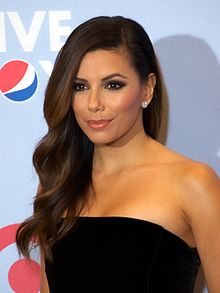
(Mario Lopez: One on One has still yet to upload recent videos, so to expand my research I have chosen yet another show to find new Latino stories.)
For my next blog post, I will discuss the television show, Fight Factory. Fight Factory is a show that follows the lives of men fighting for the title of the Ultimate Fighting Championship (UFC). The AKA gym that is considered the "home" of these men is run by Latino, Javier Mendez - a very credible trainer for UFC.
Mendez is a former world champion in kickboxing and now works at his personal gym in San Jose, California. He trains men of all races and is working heavily with his current heavy weight champion, Cain Velasquez.
Watching the show, the audience is immersed in world of fighting. This brutal sport shows the harsh effects on the bodies of these athletes and the pressure they have to endure to stay in the sport. The show features a handful of Latino men training to become fighters and showing that it is a sport only meant for few.
UFC has become an incredible popular sport in the last several years and many minorities tune in every week to see these spectacular fights. It is a sport that proves who is the toughest and gives hope to many underdog stories. The depth of these fighters gives chance to the audience that if they could work hard at anything they could achieve their goals. The drama that ensues past the fighting proves more to the audience then the actual fight could.
Monday, November 26, 2012
Latino 101- The Latina (Female)
The Latina female has been equally as stereotyped as the Latino male. In brief, she has been stereotyped as follows:
- Female clown: the female clown may be portrayed as attractive, but she does not cross the line to sexy. Her crazy antics play down her attractiveness to allow her to be a figure of ridicule more so than a figure of desire.
- examples: Carmen Miranda
- The harlot: The harlot is oversexed, hot-tempered and untrustworthy. She may be a love interest, but only temporarily.
- Dark lady: Portrayed as mysterious, sultry and often irresistible. However, she is more virginal than the harlot. Additionally, similar to the harlot, she may be a love interest, but will never get and keep the guy.
- examples: Dolores del Rio
The above stereotypes are not directly addressed in Latino 101, however, there is a lot of emphasis on the female body. In general, Latinas are PROUD of their curves and men LOVE their curves. This is seen almost unanimously among the speakers. Comedian Joey Vega stated that "Latin and Black women are the only women who get happy when their a**es get huge. When a Latina's a** gets big, they're thrilled. You tell a white woman her a** is big, you go 'honey, you a** is quite large' you go 'NO STOP IT!' They go all crazy, they go 'Give me a pilates tape, hurry up!' You tell a Latina her a** is big, you go 'Honey, mira pa'lla esas nalgas, DAMN!' 'It's big, right? It's big, you know it's big.'" Contemporary Latinas are also described as "hot, fiery, sexy and spicy", which does allude to a combination of the three stereotypes. Latina women are described as still wanting to have their own careers, but also want the more chivalrous Latino who opens doors and pays.
Interesting points are brought up in Latino 101 pertaining to different cultures. For example, one comedian stated that when a Latina becomes pregnant, she becomes a statistic, but when a white girl gets pregnant, she becomes a movie named Juno and society gives her an Oscar.
Latinas in Latino 101 seem to agree that though they can end up subject to more traditional gender roles from an early age, there is a sense of power that they can rule the world. However, there are definitely allusions throughout the show that does indicate some machismo left, though it is split between joking about it, and the women reasserting that the woman always holds the power.
Sunday, November 25, 2012
The final episode that I watched of Pastport on NUVO TV was with actress Tatyana Ali, best known for playing Ashley Banks on the TV show The Fresh Prince of Bel-Air. Tatyana is a first generation American who's father is from Trinidad and mother is from Panama. She visited Panama once but was too young to remember the trip. In this episode the young actress returns to Panama with her sister to meet her uncle and extended family and to learn about her Panamanian heritage. While there, she also was able to perform and record with a famous reggaeton group. As always, it was very moving to see this young successful American actress explore one side of her ethnic heritage and meet family members and have a life changing experience.
Now that I have seen four episodes ( Cuba, Colombia, Argentina, and Panama) I can conclude that the show is consciously breaking with American stereotypes about Latinas/Latinos, educating the viewer of the diversity of Latino culture. It is not the "Imagined Latinidad" that has long been the tradition in American media. The male hosts are not depicted as "Latin-lovers", or "banditos", and the female hosts are not exploited as exotic sex symbols nor are they portrayed as spicy "spitfires". This is a reality show about real Latino-Americans, each with very different, and complicated family histories.The show does battle with the Hollywood notion of the generic-Latino and includes American entertainers whose audiences may not even be aware of their Latino heritage. Tatyana, for example, is famous for playing an African-American character on sitcom with an all African-American cast, which included Will Smith as the show's star. As an Afro-Caribbean-Latino she breaks the mold of what Hollywood says Latinas should look like. In picking these entertainers the producers are showing that all Latinas do not look like Selma Hayek or Jenifer Lopez, some look African, some look European etc.
Also I believe it is safe to say that the intended audience is young Latino-Americans that speak mostly English, but may understand some Spanish. I say this because the hosts are mostly young and they engage in youth culture in some way(music groups, young actors, hip fashion). Secondly, hosts speak English when addressing the audience during their intervews where the speak directly to the camera, and all the spanish that is spoken on the show is subtitled in English. Also, they are all entertainers that appear in English language media. Lastly, the fast tempo music and rapid cuts in the editing seems to indicate that the producers are shooting for a hip audience.
Over all, I found Nuvo's Pastport to be an entertaining show which provides much needed visibility for Latinas/Latinos in the media, and represented in a very thoughtful and positive manner.
Now that I have seen four episodes ( Cuba, Colombia, Argentina, and Panama) I can conclude that the show is consciously breaking with American stereotypes about Latinas/Latinos, educating the viewer of the diversity of Latino culture. It is not the "Imagined Latinidad" that has long been the tradition in American media. The male hosts are not depicted as "Latin-lovers", or "banditos", and the female hosts are not exploited as exotic sex symbols nor are they portrayed as spicy "spitfires". This is a reality show about real Latino-Americans, each with very different, and complicated family histories.The show does battle with the Hollywood notion of the generic-Latino and includes American entertainers whose audiences may not even be aware of their Latino heritage. Tatyana, for example, is famous for playing an African-American character on sitcom with an all African-American cast, which included Will Smith as the show's star. As an Afro-Caribbean-Latino she breaks the mold of what Hollywood says Latinas should look like. In picking these entertainers the producers are showing that all Latinas do not look like Selma Hayek or Jenifer Lopez, some look African, some look European etc.
Also I believe it is safe to say that the intended audience is young Latino-Americans that speak mostly English, but may understand some Spanish. I say this because the hosts are mostly young and they engage in youth culture in some way(music groups, young actors, hip fashion). Secondly, hosts speak English when addressing the audience during their intervews where the speak directly to the camera, and all the spanish that is spoken on the show is subtitled in English. Also, they are all entertainers that appear in English language media. Lastly, the fast tempo music and rapid cuts in the editing seems to indicate that the producers are shooting for a hip audience.
Over all, I found Nuvo's Pastport to be an entertaining show which provides much needed visibility for Latinas/Latinos in the media, and represented in a very thoughtful and positive manner.
Curvy Girls: Ep. 3
Three episodes into the Curvy Girls, it is becoming clear that these Latino women have to work very hard to work in the modeling industry. Because their bodies do not fit the "norm" for modeling, they have to seek out modeling agencies that will accept them, and want to showcase their looks. It seems like there is still a demand for plus size models though and so these women continue to compete to get the work. It's worth mentioning that because these women are Latina they bring a stereotypical idea of Latina women to the forefront. It is a well known stereotype for Latina women to have voluptuous bodies. They have been thought of and described as "curvy" in the past, but not always with a positive perspective. This show helps to promote "curvy" women and promote embracing one's self even if it's not what may be considered normal in mainstream media. There is one women on the show, Rosie, who goes to the doctor and finds out she is considered obese. She is a full-figured model, but explains how she understands she must lose weight in order to be healthy. The women go through many obstacles on this show and provide diverse representations of women, who aren't just Latina, but are full-figured. It's sad when you see how hard they are working to try and succeed in an industry that primarily wants thin models, and they fall short. In this episode, it seemed like LornaLitz didn't make it into a modeling agency because was considered not "curvy" enough. It is important for viewers to see this side of their stories and realize that it isn't easy for them to break into this niche part of the industry just because they are larger than a size 6.
Latino 101- The Latino (Male)
The media is full of stereotypes on every kind of person. The media and media history is full of stereotypes of the Latino male.
In brief:
In brief:
- Latin Lover: typically perceived as dark, dangerous and sensual
- examples: Rudolph Valentino (not Latino, but he started the archetype); Antonio Banderas
- Male Buffoon: stupid sidekick, simple-minded, childlike, speaks broken English
- examples: Desi Arn'az, more recently Fez in That 70s Show
- El Bandido: violent, criminal, untrustworthy or promiscuous. Treacherous, dirty, violent
- examples: Scarface, Machete
Now, how do Latinos portray themselves on Latino 101?
Latinos do poke fun at stereotypes and at themselves. First, we can look at the men in Latino 101 themselves. There is every shade and every size of Latino on the show, especially into the second season when they have more people on cast. Men on Latino 101 are clean shaven, have artfully shaved beards and not so artfully shaved beards.
Latinos on Latino 101 and the Latin Lover. The men on the show do not necessarily promote themselves as dangerous, but joke about Latino numbers in jail. The men are split when it comes to the loving aspect of Latino lovers. Some seem to indicate that yes, Latino men are passionate lovers and others call out the stereotype as false, but use it as a ploy with Anglo women who have that belief and that expectation.
Latinos on the Male Buffoon. In general, previous media portrayals of the male buffoon implied that the character was silly, unintelligent and spoke poor English. Latinos on Latino 101 use this stereotype, twist it and use it to their advantage. If they want to pick up women, they pretend they can't speak English or will use a faked accent.
Latinos on El Bandido. This stereotype is not quite as well addressed as the others.
NuvoTV
http://www.adweek.com/news/television/jennifer-lopez-buys-part-nuvotv-143633
I wanted to share the link above because I feel like it brings up several interesting points that relate to the topics we have covered in class. It also explains a bit about Jennifer Lopez's new partnership with NuvoTV, which I think in itself is very interesting, especially since she plays a huge role in the representation of the Latina/o culture. First let me begin by mentioning NuvoTV, (formerly Sí TV), was first established in 1997 and focused on producing English-language content, but for Latina/os. In my opinion this was and still is a great achievement for the network since, like the article above mentions, "most of the television options for Latinos are in Spanish at the moment". We have discussed these type of statistics in class along with the fact that many American-Latina/os tune into English-language programs. There is a greater visibility of Latina/os in media these days, and show's like The Brothers Garía and The George Lopez Show have helped pave the way for better representations of Latina/os on television. With a network like NuvoTV, that is aiming to increase Latina/o visibility and broaden representations of the culture and it's people, I think things can only get better from here.
NuvoTv changed their name from Sí TV back in 2004, attempting to alleviate confusion with what the name stood for and decided that NuvoTV ("new voice") television would achieve their message with less confusion. Most recently, the network has teamed up with Jennifer Lopez to help appeal to a more modern and broader group of Latina/os. She will be airing her own content from Nuyorican Productions as well and I found it interesting that Michael Schwimmer, CEO of NuvoTV, directly expresses that they intend to use Jennifer Lopez as a part of their advertising and marketing plan. She's a mega superstar and I definitely think it will be beneficial to have her promoting the network, along with her own program, but also weighing in on what kind of content should be aired or produced for the network. I think it would be great if NuvoTv could reach a point where although they were targeting Latina/os, they were also able to appeal to other ethnicities while doing so. Jennifer Lopez may be able to help do this and I'm looking forward to seeing what she brings to the network.
Friday, November 23, 2012
This episode of Pastport is the first that did not center around a Latino-American that was born in Latin America. However, this did not change the basic premise of the show, but it is the first episode with a male host. The Reno 911 actor Carlos Alazraqui was not born in Argentina but his parents were. Carlos is married and has a baby on the way and wants to learn more about the country where his parents grew up so he can pass this cultural heritage down to his child. He would also like to brush up on his Spanish.
Like all the episodes, Pastport is about connecting to ones cultural roots.Because this episode had a male host that was born in the US and feels that he does not speak Spanish fluently, I feel like the show is quite diverse in terms of representing Latinos.I don't see any stereotypes that are being used to market the show, and representation is always very positive, after all these are all successful entertainers in the US. It does seem though their target audience would be young Latino-Americans. The music and type of entertainers would appeal to a younger generation, and it's bi-lingual nature makes it a good fit for a young audience that may speak English as a first language but understands some Spanish.
Thursday, November 15, 2012
Model Latina
Since Mario Lopez: One on One is a relatively new show, I chose to substitute my post with the television show Model Latina.
Model Latina is a show pushed towards the Latina female audience. The show focuses on how women on Latina descent compete against each other to become the next big Latina model. In the episode I will be critiquing displays the women to make a political ad for Latina viewers in order to go out and vote.
While each contestant attempts to create a positive image on voting, the show also pushes the importance of the actual Latino vote in America. Historically, Latinos have one of the smallest votes in America, because most choose not to vote. However, the strive to encourage more Latinos to get out and vote for the next President of the United States is a big push to helping Latinos get their word out in the political atmosphere. This can create a new political angle for Latinos and could help them create their own representatives or lobby in America.
Thursday, November 8, 2012
Mario Lopez: One on One - Eva Longoria
In this episode of Mario Lopez: One on One, Mario interviews Latina actress Eva Longoria and her rise to celebrity status in Hollywood.
Eva Longoria, born and raised in Corpus Christi, Texas was born the youngest and fourth child in her family. At age 15 she wanted to start saving money to help pay for her further education so she had taken a job at a local Wendy's. This job experience also expanded in her college career where she had also worked as an auto mechanic, dentist assistant and more. Longoria had also entered into a beauty pageant at Texas A&M Kingsville to help pay for her college textbooks (a fifth place prize), however, in a surprise victory she had won first place and had won a full scholarship for her senior year of college.
After her pageant victory at her small college, she had enrolled in becoming 'Miss Corpus Christi' where she had earned a trip to Los Angeles and in turn a new career. At age 29, she had finally received her breakthrough roll in ABC's Desperate Housewives. The show became a success and she became a symbol for Latina success in recent Hollywood. Longoria claims that the media had tried to distort her personal image, however, from the experience she had in life she had kept herself grounded and proceeded to become an image of success.
Growing up in a Latina(o) family had made Longoria more compassionate about giving back to the community and trying to help out the people she knows of back in Texas. One charity that she had started was Eva's Heros, an organization in San Antonio that helps out the mentally handicap. This sort of charity she runs is from the influence of her eldest sister who was born with a mental disability. The love and compassion her family had to take care of her and her sisters was the strong bond that most Latinos(as) have with their families and because of this, Longoria feels the need to help out the people who deserve it.
-Alex
Eva Longoria, born and raised in Corpus Christi, Texas was born the youngest and fourth child in her family. At age 15 she wanted to start saving money to help pay for her further education so she had taken a job at a local Wendy's. This job experience also expanded in her college career where she had also worked as an auto mechanic, dentist assistant and more. Longoria had also entered into a beauty pageant at Texas A&M Kingsville to help pay for her college textbooks (a fifth place prize), however, in a surprise victory she had won first place and had won a full scholarship for her senior year of college.
After her pageant victory at her small college, she had enrolled in becoming 'Miss Corpus Christi' where she had earned a trip to Los Angeles and in turn a new career. At age 29, she had finally received her breakthrough roll in ABC's Desperate Housewives. The show became a success and she became a symbol for Latina success in recent Hollywood. Longoria claims that the media had tried to distort her personal image, however, from the experience she had in life she had kept herself grounded and proceeded to become an image of success.
Growing up in a Latina(o) family had made Longoria more compassionate about giving back to the community and trying to help out the people she knows of back in Texas. One charity that she had started was Eva's Heros, an organization in San Antonio that helps out the mentally handicap. This sort of charity she runs is from the influence of her eldest sister who was born with a mental disability. The love and compassion her family had to take care of her and her sisters was the strong bond that most Latinos(as) have with their families and because of this, Longoria feels the need to help out the people who deserve it.
-Alex
This week I watched the 2nd episode of Pastport. Colombian-American actress Paula Garces (Harold & Kumar) returns home to Colombia to meet her brother for the first time and to reconnect with her father who she never knew was her real dad.
Paula left Colombia at a very young age and then lived New York where she got into acting. She has vivid memories of her childhood in Colombia and she even remembers more and more as she visits theses places. One touching scene is when she visits a ranch where she and her siblings played. It is owned by her step-dad and she remembered him fondly. They had a very emotional reunion and she learned that he and her real father were friends, even before they met her mother. This was a shock.
There were a few revelations that made for great drama, but in the end it all worked out well and there seemed to be plenty of love to go around.
She also went on auditions. She at first it seemed that it did not go well, but she eventually gets a part in a telenovela. There is a fun moment when she is walking with her father and she gets a call that she has been chosen to be on the most popular show. This fullfills a life long dream she had to act on Colombian TV. Her grandmother in New York has always wanted to see her in a telenovela.
This was a very moving show. I thought they did a good job of showing the difficulties of immigrating to the US and leaving family behind. This seems to be the main focus of the show, to depict an American Latina or Latino returning to the place of their birth or reconnecting with cultural roots.
The shows always give a little back-story, then they launch into the trip. Once there, the subject meets family and visits important places. I am starting to see it less of a travel show. You don't get to see enough scenery or important landmarks for it to have that kind of educational effect. These shows are shaping up to be a more personal journey of the Latina-American. For that reason, and also because there is so much Spanish spoken (although subtitled in English), I think the target audience would necessarily include non-Latino Americans. However, I'm a non-Latino with a bit of an interest in Latin American culture, and I do enjoy the drama and learning more about the American celebrity's personal life, so I can still see it having mass appeal. I don't feel that there are any stereotypes that they are promoting, or using to market this particular show, so I still feel that it is a very positive representation of Latinos. now that I have seen a couple of shows I will look on the internet and see if I can find out what the public reaction of the show is.
Paula left Colombia at a very young age and then lived New York where she got into acting. She has vivid memories of her childhood in Colombia and she even remembers more and more as she visits theses places. One touching scene is when she visits a ranch where she and her siblings played. It is owned by her step-dad and she remembered him fondly. They had a very emotional reunion and she learned that he and her real father were friends, even before they met her mother. This was a shock.
There were a few revelations that made for great drama, but in the end it all worked out well and there seemed to be plenty of love to go around.
She also went on auditions. She at first it seemed that it did not go well, but she eventually gets a part in a telenovela. There is a fun moment when she is walking with her father and she gets a call that she has been chosen to be on the most popular show. This fullfills a life long dream she had to act on Colombian TV. Her grandmother in New York has always wanted to see her in a telenovela.
This was a very moving show. I thought they did a good job of showing the difficulties of immigrating to the US and leaving family behind. This seems to be the main focus of the show, to depict an American Latina or Latino returning to the place of their birth or reconnecting with cultural roots.
The shows always give a little back-story, then they launch into the trip. Once there, the subject meets family and visits important places. I am starting to see it less of a travel show. You don't get to see enough scenery or important landmarks for it to have that kind of educational effect. These shows are shaping up to be a more personal journey of the Latina-American. For that reason, and also because there is so much Spanish spoken (although subtitled in English), I think the target audience would necessarily include non-Latino Americans. However, I'm a non-Latino with a bit of an interest in Latin American culture, and I do enjoy the drama and learning more about the American celebrity's personal life, so I can still see it having mass appeal. I don't feel that there are any stereotypes that they are promoting, or using to market this particular show, so I still feel that it is a very positive representation of Latinos. now that I have seen a couple of shows I will look on the internet and see if I can find out what the public reaction of the show is.
Episode 2 of Curvy Girls presented far more interesting representations of Latinas than the first episode. The first episode gave a general presentation of the women, but in the second episode we see and go deeper into the personalities of the women. To begin with, two of the models go on a photoshoot, and right away some tension builds between the two ladies. Now for one this is a reality show so drama is expected to ensue. Also though, if we think about the stereotypes of Latinas then we might also be expecting some "spicy", "feisty", or hot-headed behavior. The two models do in fact exhibit some "feistiness" towards one another. Because one of them feels that her body isn't as beautiful as her own she shows how insecure she is with her body. The other model is annoyed by this and tells her she should stop talking about her.
Overall I felt that some of the women were negatively represented as Latinas, for example, the model who was jealous of the other model and had low self esteem. On the other hand, there was the model that stated several times that she is a strong Puerto Rican women from New York who was not afraid to voice her opinions and is confident with her full figured body. There are many things going on in this episode and I think that since its meant to be an entertaining reality show the dramatic behavior is appropriate. However, being that the models are Latina, their representations seem stereotypical. I'm looking forward to watching how the rest of the women are portrayed.
-Rebecca
Overall I felt that some of the women were negatively represented as Latinas, for example, the model who was jealous of the other model and had low self esteem. On the other hand, there was the model that stated several times that she is a strong Puerto Rican women from New York who was not afraid to voice her opinions and is confident with her full figured body. There are many things going on in this episode and I think that since its meant to be an entertaining reality show the dramatic behavior is appropriate. However, being that the models are Latina, their representations seem stereotypical. I'm looking forward to watching how the rest of the women are portrayed.
-Rebecca
Stereotyping Latinos for Latinos
One interesting episode of Latinos 101 involved the stereotypes within Latino culture of other Latinos. While many may argue that these need to be let go to create one ethnic unity to strengthen the Latino identity for the greater good of Latinos, I felt that having this episode in the second season provided a greater level of authenticity in regards to Latino representation.
Is this inter-Latino stereotyping offensive? It could be. However, it's something done in the United States as well! I personally moved a lot growing up, so I heard and noticed all kinds of stereotyping of Americans by Americans. Let's cover some of those that I've heard in my lifetime.
At what point does perpetuating these stereotypes about members in another group reinforce them? Or could it be that they are taking ownership of their stereotypes and therefore ownership of their identities?
At the very least, while it brings up many of these discussions, this episode of Latino 101 (Culture Clashin') was humorous, but everyone was covered.
Andrea
Is this inter-Latino stereotyping offensive? It could be. However, it's something done in the United States as well! I personally moved a lot growing up, so I heard and noticed all kinds of stereotyping of Americans by Americans. Let's cover some of those that I've heard in my lifetime.
- In the South, people refer to Northerners as "Yankees" or "Yanks".
- In the North, there are the opposing stereotypes of southerners as either very proper Southern belles or backwards rednecks.
- Texans are all cowboys.
- Texans say everything outside of Texas is a different country.
- Californians live on beaches and wear bikinis and shorts all the time.
- People say New Yorkers are rude.
- New Yorkers say people from New Jersey are wannabe New Yorkers.
- Pennsylvanians are all Amish.
- Midwesterners are all Puritan.
- In Nevada, everyone lives in casinos and children don't exist (funny, since I grew up in Las Vegas and did NOT live in a casino)
- In Las Vegas, everyone grows up to be strippers or blackjack dealers (true in some cases)
At what point does perpetuating these stereotypes about members in another group reinforce them? Or could it be that they are taking ownership of their stereotypes and therefore ownership of their identities?
At the very least, while it brings up many of these discussions, this episode of Latino 101 (Culture Clashin') was humorous, but everyone was covered.
Andrea
Wednesday, November 7, 2012
Curvy Girls- Reality TV on NuvoTV
The program Curvy Girls is a reality show on NuvoTV that focuses on four plus-sized models as they work their way into modeling industry.
The first episode introduces us to Lornalitz, Denise, Ivory and Rosie. At first I thought the show set up these four women to compete with one another in order to win competitions. I had an idea that it would be like the well known show, America's Next Top Model, hosted by Tyra Banks, except with Latinas. I was surprised to see that it was actually a reality show simply about the lives of these women, who are "different" because of their size, and how they are trying to achieve success. I had not yet come across a reality show that focuses on women the way the producers of Curvy Girls does and was pleased to see that not only are there four women being presented, but they are not your typical skinny models, they are beautiful full figured women.
Within this first episode we follow these women as they proceed with their daily activities. They go to professional modeling agencies trying to get signed. They work either individually or together on shoots for clothing catalogs, commercials, clothing stores, fashion magazine, etc., and always have time to stop and share their feelings about what they are partaking in, as most reality shows do. What I found most interesting is that these women are not only full figured, but they are latina. What is interesting is they are able to break down several paradigms because they are full figured latina women. This is rarely seen in Hollywood and definitely rarely seen in the so called top modeling city in the U.S., New York.
I have mixed feelings on what all these women are portraying of Latina culture because I am still not sure if every single one of them is actually Latina, but I am looking forward to watching more episodes to find out. Lornalitz makes it clear that she is a Puerto Rican from N.Y., and Rosie speaks spanish many times during the episode so she is probably Latina, but I can't be sure of the other two characters. None the lesss, I am excited to see what kinds of stereotypes and representation of Latinas NuvoTv is presenting to us with this program.
The first episode introduces us to Lornalitz, Denise, Ivory and Rosie. At first I thought the show set up these four women to compete with one another in order to win competitions. I had an idea that it would be like the well known show, America's Next Top Model, hosted by Tyra Banks, except with Latinas. I was surprised to see that it was actually a reality show simply about the lives of these women, who are "different" because of their size, and how they are trying to achieve success. I had not yet come across a reality show that focuses on women the way the producers of Curvy Girls does and was pleased to see that not only are there four women being presented, but they are not your typical skinny models, they are beautiful full figured women.
Within this first episode we follow these women as they proceed with their daily activities. They go to professional modeling agencies trying to get signed. They work either individually or together on shoots for clothing catalogs, commercials, clothing stores, fashion magazine, etc., and always have time to stop and share their feelings about what they are partaking in, as most reality shows do. What I found most interesting is that these women are not only full figured, but they are latina. What is interesting is they are able to break down several paradigms because they are full figured latina women. This is rarely seen in Hollywood and definitely rarely seen in the so called top modeling city in the U.S., New York.
I have mixed feelings on what all these women are portraying of Latina culture because I am still not sure if every single one of them is actually Latina, but I am looking forward to watching more episodes to find out. Lornalitz makes it clear that she is a Puerto Rican from N.Y., and Rosie speaks spanish many times during the episode so she is probably Latina, but I can't be sure of the other two characters. None the lesss, I am excited to see what kinds of stereotypes and representation of Latinas NuvoTv is presenting to us with this program.
Mario Lopez: One on One with NFL Jet's Quarterback Mark Sanchez
Mario Lopez: One on One takes Latinos(as) in the United States that have made it famous and pursued a career in something they are very passionate about. In this episode Mario interviews current NFL quarterback Mark Sanchez.
Mark Sanchez grew up in southern California with divorced, yet supportive parents. They had always encouraged Mark to keep up his studies and to find a talent he enjoyed and pursue it as a career. Sanchez took up football and soon found himself drafted into NCAA football by southern California's most famous college, USC.
While Mark attended USC, a growth of fame rose along with his career as starting quarterback. The latino community paid more attention of the rising star and Sanchez claimed that his position was bigger then he imagined, because he was now representing the Latino community in football. Sanchez had decided to be drafted into the NFL as a junior at USC, however he had signed a letter of intent to USC that he had plans to graduate.
After graduating in 2009, Sanchez went onto his NFL career. He had become the first Latino quarterback to enter the NFL and received support and praise by the Latino community. Sanchez claims that he has reached his success by having support from his mother and father. Being Latino was very much so a key to his successful career by the amount of encouragement he received from his mother and father.
Mark Sanchez grew up in southern California with divorced, yet supportive parents. They had always encouraged Mark to keep up his studies and to find a talent he enjoyed and pursue it as a career. Sanchez took up football and soon found himself drafted into NCAA football by southern California's most famous college, USC.
While Mark attended USC, a growth of fame rose along with his career as starting quarterback. The latino community paid more attention of the rising star and Sanchez claimed that his position was bigger then he imagined, because he was now representing the Latino community in football. Sanchez had decided to be drafted into the NFL as a junior at USC, however he had signed a letter of intent to USC that he had plans to graduate.
After graduating in 2009, Sanchez went onto his NFL career. He had become the first Latino quarterback to enter the NFL and received support and praise by the Latino community. Sanchez claims that he has reached his success by having support from his mother and father. Being Latino was very much so a key to his successful career by the amount of encouragement he received from his mother and father.
This breakthrough of a Latino becoming a quarterback (a mostly caucasian position) was a huge idea for Latinos throughout the country. The picture of seeing someone who had worked hard to get where he is today is encouragement and assurance that anyone, no matter what skin-color they are, can be what they want to be.
-Alex
Intro to Latinos 101
At first glance, I was interested in viewing Latinos 101 on Nuvo TV because on the surface, it appeared to be a show that would explain Latinos and Latino Culture to non-Latinos. I was interested in seeing how they would portray themselves, ourselves, to other audiences. However, this was not necessarily the case. The way the show works is actually geared more towards Latinos by Latinos. They share stories and talk about themselves and their lives in ways that bring the viewer, especially the Latino viewer, into their stories and bring a sense of "oh my goodness, this is MY life too!"
While the stories and topics of discussion do give a sense of identification and understanding to the Latino viewer, it is not limited to the Latino viewer. They share stories and instances that can be understood by culture. In particular, it's an interesting cast in that while it is mostly comprised of hilarious comedians, it is not limited to Latinos. There are several in the cast that are African-American, African-Latino, European-American and even Indian-American. This provides a look into Latino culture from the inside and from the outside.
Perhaps the best part of the cast selection thus far is the scope of Latinos represented. Oftentimes, the United States has a stereotype of what Latinos are or have to be. Any variation is merely geographic in the sense that the standard "Latino" in Texas is Mexican versus Cuban in Miami. However, these are still limited to only one group of people per population. Latino 101 has a cast of Latinos that cover nearly every country and every skin tone, reminding the viewer that "Latino" is not a homogenous ethnic identity or appearance, rather it covers a variety of different people and different cultures.
Andrea
While the stories and topics of discussion do give a sense of identification and understanding to the Latino viewer, it is not limited to the Latino viewer. They share stories and instances that can be understood by culture. In particular, it's an interesting cast in that while it is mostly comprised of hilarious comedians, it is not limited to Latinos. There are several in the cast that are African-American, African-Latino, European-American and even Indian-American. This provides a look into Latino culture from the inside and from the outside.
Perhaps the best part of the cast selection thus far is the scope of Latinos represented. Oftentimes, the United States has a stereotype of what Latinos are or have to be. Any variation is merely geographic in the sense that the standard "Latino" in Texas is Mexican versus Cuban in Miami. However, these are still limited to only one group of people per population. Latino 101 has a cast of Latinos that cover nearly every country and every skin tone, reminding the viewer that "Latino" is not a homogenous ethnic identity or appearance, rather it covers a variety of different people and different cultures.
Andrea
Monday, November 5, 2012
I watched the Passport show on NUVO. Each episode takes a look at a particular country in Latin America through the eyes of a famous Latino American.
Episode 1 was about fashion designer Nicole Di Rocco as she takes her parents on a trip back to Cuba. Nicole talks about how she grew up not identifying with her Cuban heritage and how she wanted to fit in with her non-latino friends. She reveals her emotional transition of becoming aware and proud of her Cuban heritage and at the same time explains how she came up with the name of her label, and how her career began. The trip to Cuba was emotional for her and her family and also gave a glimpse into the beauty of the country and the richness of it's culture.
It is an interesting show because it allows American viewers to see how culturally diverse Latina/Latino Americans are. It could be seen as a travel show, but it communicates much more than merely describing the country as an exotic destination. NUVO's Passport seems to me to be more about the roots of Latino American culture. I think that the show's target audience is Latinas/Latinos who want to learn more about these places and the origins of Latin culture, but I also think it would appeal to people like myself who have an interest in Latin America. I have always felt that Americans should know more about America's neighbors and I have always wanted to travel to these countries and experience the people and the culture for myself. I think it is interesting how they find actors and celebrities with an ethnic connection to the destination to be hosts. This creates a context for the viewer to understand the experience as the American celebrity acts as surrogate for the viewer. The viewer can watch the show and see what it is like for a person from the US who is Latino to connect with their cultural roots. It is the most fascinating aspect of the show in my opinion. So far I would say that it is a very positive representation of Latinos. I will hold off on further analysis about stereotypes until I have seen more episodes.
Subscribe to:
Posts (Atom)